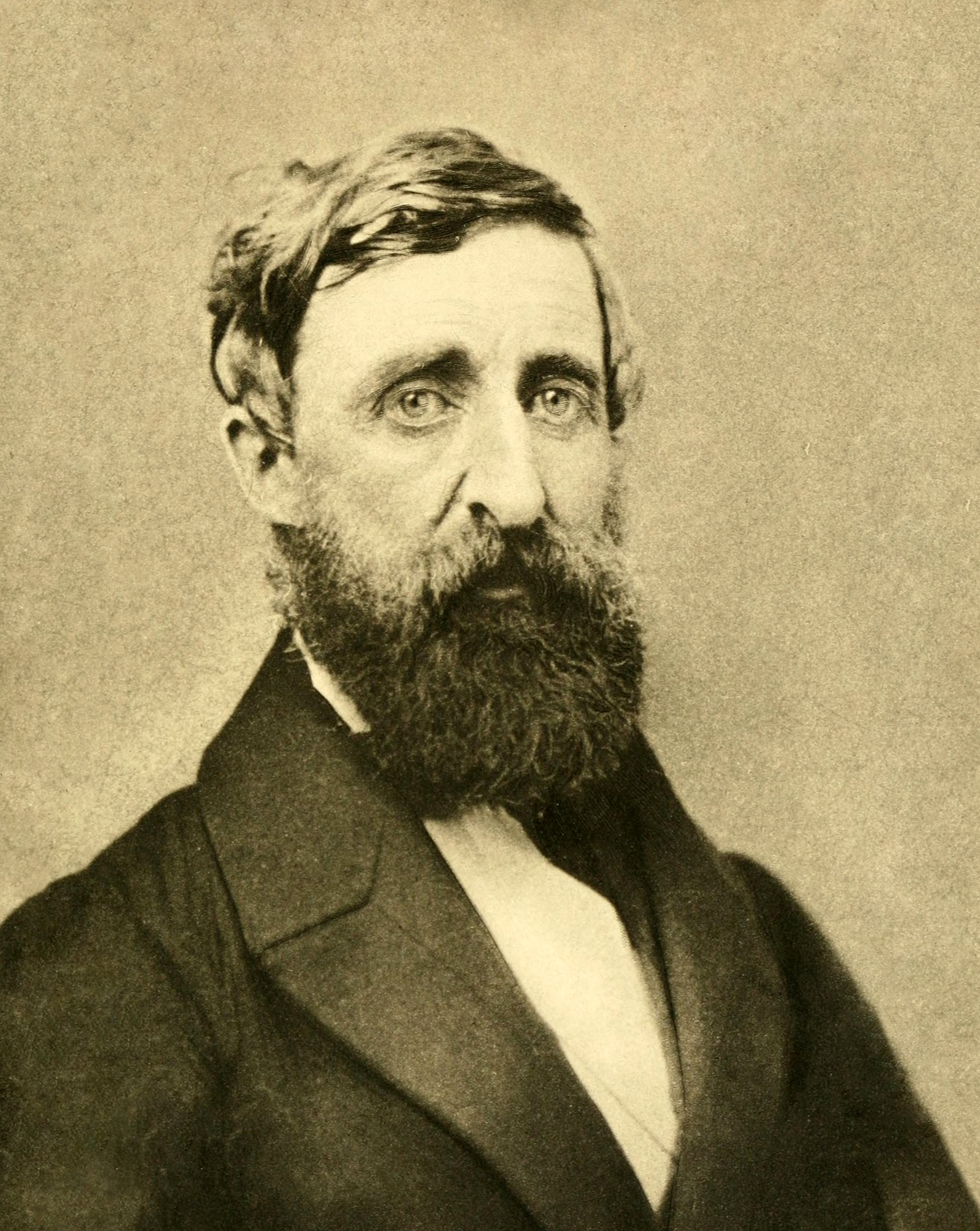
The Transcendentalist Club

Reviving the Transcendentalist Club

In a world increasingly dominated by consumerism and material pursuits, the transcendentalist movement offers a refreshing counterpoint. This philosophical school, rooted in the belief of the inherent goodness of humanity and the divine spark within each individual, advocates for self-reliance and a life lived in harmony with one’s true essence. Inspired by the profound wisdom of ancient Eastern philosophies like Vedanta, transcendentalists sought to rediscover the spiritual nature of human existence.

The Timeless Relevance of Transcendentalism

The ideas of transcendentalism, pioneered by thinkers like Ralph Waldo Emerson and Henry David Thoreau, remain remarkably relevant today. In an age of unprecedented stress, uncertainty, and a growing sense of disconnectedness, the movement’s emphasis on inner peace, self-discovery, and the interconnectedness of all things offers a much-needed antidote.

Introducing the Forefathers of Transcendentalism

To fully appreciate the enduring value of transcendentalism, it is essential to delve into the lives and works of its key figures. Emerson, with his eloquent essays and inspiring speeches, ignited a philosophical revolution, advocating for individualism, self-trust, and the importance of nature. Thoreau, a solitary figure who retreated to Walden Pond, demonstrated the power of simple living and the pursuit of a meaningful existence.

A Message of Hope and Inner Belief

At the heart of transcendentalism lies a profound message of hope and the potential for human transformation. By cultivating self-awareness, embracing the divine within, and living in harmony with nature, individuals can overcome the challenges of life and experience a sense of fulfillment and peace. The movement’s emphasis on self-reliance and personal responsibility empowers individuals to take control of their destinies and create a more meaningful world.

A Call to Revive the Transcendentalist Club

While the original Transcendentalist Club disbanded in the mid-19th century due to the rise of materialism and the Civil War, its ideals continue to resonate with contemporary society. It is time to revive this important movement and provide a space for individuals to explore the profound questions of life, connect with like-minded souls, and cultivate a deeper sense of purpose. By reestablishing the Transcendentalist Club, we can create a community that fosters intellectual growth, spiritual development, and a commitment to a more just and sustainable future.

Unique Tools for Personal Growth

In addition to its philosophical foundations, the revived Transcendentalist Club will offer unique tools and practices to support individuals on their journey of self-discovery and spiritual growth. These

  • Meditation: A cornerstone of many spiritual traditions, meditation provides a powerful technique for calming the mind, cultivating mindfulness, and accessing deeper states of consciousness.
  • Nature Connection: Following in the footsteps of Thoreau, the club will emphasize the importance of spending time in nature to reconnect with the natural world and cultivate a sense of awe and wonder. A few brief moments of solitude can really help one to decouple from daily grind and reset a sense of purpose.
  • Community Engagement: The club will foster a sense of belonging and connection through community-based projects and events, promoting social justice, environmental stewardship, and the cultivation of a more compassionate and harmonious society.

Embracing Universal Religion

The Transcendentalist Club will be a secular space that welcomes individuals from all faiths and backgrounds. Inspired by the message of Swami Vivekananda, the club will promote the idea of universal religion, emphasizing the underlying unity of all spiritual paths. By fostering dialogue, understanding, and respect for diverse beliefs, the club will contribute to a more harmonious and inclusive society.

The Modern Transcendentalist

The world is in an awkward place right now – the human and economic burden of the prevailing European war and the ongoing pandemic that continues to disrupt the globe with its so called cycles, variants and waves. Everything has changed – the way we choose to live is different, many personal relationships have either fractured or have been challenged, societies have become fragmented, the way we work has evolved and proliferation of remote communication is everywhere. The global economic outlook and its recovery looks rather uncertain. There are no timelines in the horizon as to when this status-quo will end and we will move forward to what we previously considered to be normal. We are confused as to what should be considered normal now? We question whether we will ever to back to that previous identity of norm? The 2 years of forced pandemic isolation has taught us to embrace solitude and we are starting to contemplate ‘how can we live more meaningful lives? ’

Despite all the doom and gloom the current situation has inspired a new type of man (or woman) -the modern transcendentalist.

People are questioning and re-evaluating the purpose with which they live, what they value and what they live for. We all have been forced to become more introspective, mindful and the search for inner happiness goes on. Such thoughts are at the forefront of all our minds, irrespective of gender, ethnicity, religion, denomination or country one belongs to. The ‘great resignation’ is here and the awakened people are leaving their unhappy jobs to embrace life, family and nature to find some meaning/purpose for their existence. The masses are hearing a call from within the inner depths of their souls, a call which is shouting out ‘freedom, freedom, freedom’.

Thoreau a 19th century transcendentalist states that most people labour under a mistake and in his book ‘Walden’ he writes the following:

The better part of the man is soon ploughed into the soil for compost…. By necessity, they are employed…. laying up treasures which moth and rust will corrupt and thieves break through and steal. It is a fool’s life, as they will find when they get to the end of it, if not before. I see young men, my townsmen, whose misfortune it is to have inherited farms, houses, barns, cattle and farming tools; for these are more easily acquired than got rid of…..Who made them serfs of the soil? Why should they eat their sixty acres, when man is condemned to eat only his peck of dirt? Why should they begin digging their graves as soon as they were born? They havt got live a man’s life, pushing.”

Henry David Thoreau, Walden.

Thoreau is describing what most people are feeling in current times – Do we want to work or be worked? Are we really taking anything with us to the ‘grave’ – why has there been such a desire to possess more and more, yet we are not truly feeling fulfilled? That is the core essence of Thoreau’s teachings. As a reader we should not under any false pretence believe that we as a society are shifting away from materialism in totality. A modern transcendentalist doesn’t believe that all sacrifice is necessary.

A modern Transcendentalist takes a more balanced approach to life – he or she seeks material progress but at that same time understands that material progress alone doesn’t lead to the inner ‘freedom’ one desires. In Sanskrit ‘Para-Vidya’ is classified as higher knowledge and ‘Apara-Vidya’ is classified as lower knowledge. All external knowledge that we gain including knowledge through our education system is classified as the ‘Apara-vidya’ or lower knowledge. Higher knowledge can only be gained by looking inwards through meditation and contemplation. Through that constant inner search we find that the divine that shines in you and me is ultimately the same and we are part of the same consciousness – a ‘non-dualistic’ approach considering all to be part of the same ‘oneness’. This inner search is the only way to experiencing sublime peace.

A modern transcendentalist taking this learnings and lives a meaningful life amidst the everyday chaos of society, but at the same time realises that the knowledge within is the ultimate true knowledge. This is what differentiates a modern transcendentalist from a modern man or woman.This is at the core of Vedantic Philosophy (I will post more articles on this in the coming days).

Do you seek to be a modern transcendentalist? – ‘Tat Tvam Asi’ – you art thou.

Nature

nature

Nature never wears a mean appearance. Neither does the wisest man extort her secret, and lose his curiosity by finding out all her perfection. Nature never became a toy to a wise spirit. The flower, the animals, the mountains, reflected the wisdom of his best hour, as much as they had delighted the simplicity of his childhood.

When we speak of nature in this manner, we have a distinct but most poetical sense in the mind. We mean the integrity of impression made by manifold natural objects. It is the this which distinguishes the stick of timber of the woodcutter, from the tree of the poet. The charming landscape which i saw this morning is indubitably made up of some twenty or thirty farms. Miller owns this field, Locke that, and Manning the woodland beyond. But none of them owns the landscape. There is a property in the horizon which no man has but he whose eye can integrate all the parts, that is, the poet. This is the best part of these men’s farms, yet to this their warranty deeds give no title.”

– Ralph W. Emerson – Extract from his essay on Nature.

The Beginnings

henry_david_thoreau_-_dunshee_ambrotpe_1861

As a single footstep will not make a path on the earth, so a single thought will not make a pathway in the mind. To make a deep physical path, we walk again and again. To make a deep mental path, we must think over and over the kind of thoughts we wish to dominate our lives.”

– Henry David Thoreau